Trying to choose between Chelsea and the West Village for a condo purchase? At first glance, both neighborhoods offer prime Downtown Manhattan locations, strong buyer demand, and distinctive housing stock. But when you look closer, the condo markets differ in ways that can shape your budget, your options, and how flexible your search can be. Let’s break down the numbers and the on-the-ground housing mix so you can compare them more clearly.
Inventory: Chelsea Offers More Choice
If your top priority is having more condos to compare, Chelsea currently stands out. StreetEasy’s Chelsea condo listings show 202 active condo listings, while StreetEasy’s West Village condo listings show 36. That means Chelsea has about 5.6 times as many active condo listings right now.
For you as a buyer, that difference matters. More inventory usually means more chances to compare layouts, building types, monthly carrying costs, and amenity packages without leaving the neighborhood. In the West Village, a smaller active inventory can mean fewer direct substitutes when a listing fits your needs.
Pricing: Similar Prestige, Different Structure
The two neighborhoods both sit in the upper tier of the Manhattan market, but the pricing backdrop is not identical. According to Realtor.com neighborhood market data, Chelsea has a median list price of $2,257,500 and a median price per square foot of $1,942. West Village shows a median list price of $1,995,000 and a median price per square foot of $2,092.
That combination is important. Chelsea’s median list price is higher, but West Village carries the higher median price per square foot. If you are comparing value on a space basis, the West Village may ask you to pay more for each square foot even when total asking prices look somewhat comparable.
Both neighborhoods are also reported at about a 98% sales-to-list-price ratio, which suggests sellers in each area are generally pricing close to where deals are getting done. Realtor.com also reports 106 days on market in Chelsea versus 85 days in West Village, pointing to somewhat faster movement in West Village listings overall.
Condo Sales: Chelsea Shows More Volume
Recent condo sale snapshots also help frame the market. PropertyShark reports Chelsea condo trends with a median condo sale price of $3.3 million in February 2026 across 43 transactions. PropertyShark’s West Village condo trends show a median condo sale price of $2.6 million in January 2026 across 13 transactions.
Because these reports cover different months, they should be treated as directional context, not a strict month-to-month comparison. Still, the numbers reinforce a clear point: Chelsea is seeing more condo transaction volume, while West Village remains a tighter market with fewer recorded condo sales.
Entry Points and Price Bands
One of the biggest practical differences is where your search can begin. On the current Chelsea condo market page, the range starts with a studio around $615,000, includes one-bedrooms around $999,000 to $1.135 million, and extends to larger or newer product from roughly $2.85 million to $9.95 million.
The West Village condo market page starts higher. Current examples include one-bedrooms around $1.395 million to $2.999 million, two-bedrooms around $3.145 million to $3.69 million, and larger homes above $6 million.
For buyers, that means Chelsea offers a wider spread of entry points and a broader range of product types. West Village tends to present a higher floor for entry and a narrower set of available options.
Building Stock: Newer Variety vs. Historic Constraint
Chelsea and the West Village also feel different because they are built differently. The Landmarks Preservation Commission’s Chelsea Historic District Extension report describes a neighborhood shaped by Greek Revival, Italianate, Anglo-Italianate, neo-Grec, French Second Empire, and later additions including modern high-rise apartment buildings. PropertyShark also describes Chelsea housing options as including converted lofts, post-war walkups, and newer high-rise buildings.
That mixed built environment gives Chelsea a broader condo profile. You are more likely to encounter newer condominium buildings, larger developments, and loft-style conversions alongside older housing stock. On the active market, StreetEasy also labels several Chelsea listings as new development, which supports that broader supply of newer condo product.
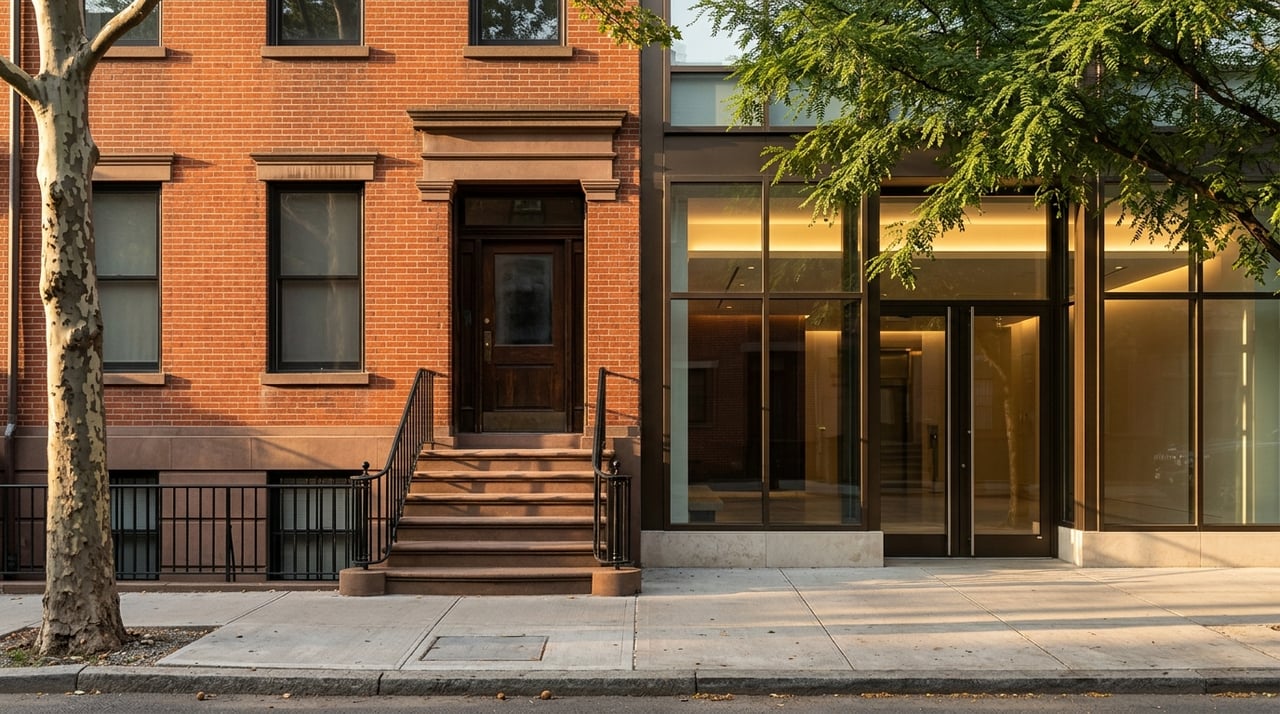
The West Village is more architecturally constrained. PropertyShark says roughly 80% of the neighborhood has been designated historic district, and the Greenwich Village Historic District Extension II report highlights early 19th-century buildings, including many Federal and Greek Revival row houses. In practical terms, that preservation-heavy context tends to support smaller-scale conversions, townhouse-style condo inventory, and fewer large new infill projects.
Amenities and Lifestyle Tradeoffs
If amenities are high on your list, Chelsea may give you more to compare within one neighborhood. Based on the active listing set, Chelsea currently shows a higher share of new-development and larger full-service addresses, which can translate into a wider menu of building features across different price points.
In the West Village, the building itself can carry even more weight because there are fewer active listings to choose from. With a smaller inventory pool, details like floor count, conversion history, and amenity package may matter more because you may not have many comparable alternatives on the market at the same time.
This is where a block-by-block approach becomes especially useful. According to StreetEasy’s Chelsea neighborhood page, location context such as proximity to the High Line, West Chelsea’s industrial corridor, or more traditional residential blocks can shape the condo experience just as much as the unit itself. In the West Village, historic rowhouse streets and smaller residential addresses often define the character of the available condo stock.
How to Compare Chelsea and West Village Condos
If you are deciding between the two, it helps to compare them using the same framework instead of relying only on price.
Compare inventory depth
Start with the number of active choices. Chelsea’s deeper inventory gives you more room to be selective. West Village’s tighter supply can require faster decision-making when the right condo appears.
Compare price per square foot
Total asking price matters, but price per square foot can tell you more about how the market values space. Based on current Realtor.com figures, West Village is carrying the higher median price per square foot.
Compare building type
Ask whether you want a newer condo, a loft conversion, or a smaller-scale historic conversion. Chelsea generally gives you more variety across those categories, while West Village often offers a more limited and preservation-influenced condo mix.
Compare amenity expectations
If features like a full-service setup or newer development finishes are important to you, Chelsea may provide more options. If you are comfortable prioritizing location and scale over a broader amenity set, West Village may still align with your goals.
Compare neighborhood context
Think beyond the apartment itself. The surrounding block, building form, and street pattern can affect everything from atmosphere to the type of inventory you will see. In these two neighborhoods, that context is a major part of the market difference.
Which Neighborhood May Fit Your Search?
Chelsea may be the stronger fit if you want more available condos, more new-development variety, and a wider spread of price points. It can be especially useful if you want the ability to compare multiple building styles and amenity packages before making a move.
West Village may appeal if you are comfortable with a smaller pool of listings and a higher price-per-square-foot backdrop in exchange for a more preservation-heavy housing context. The tradeoff is that your search may require more patience and less flexibility on exact criteria.
The right answer often comes down to how you value choice, building type, and pricing structure. If you are weighing both neighborhoods, a data-backed side-by-side review can help you focus on the condos that truly match your goals rather than chasing every new listing.
If you want help comparing specific buildings, evaluating current condo inventory, or understanding how a Downtown Manhattan purchase fits into your broader plans, the DTNYC Team offers a hands-on, neighborhood-informed approach designed to make complex decisions clearer.
FAQs
How many condo listings are currently available in Chelsea versus West Village?
- StreetEasy currently shows 202 condo listings in Chelsea and 36 in West Village, giving Chelsea a much deeper active condo inventory.
What is the price per square foot difference between Chelsea and West Village condos?
- Realtor.com reports a median price per square foot of $1,942 in Chelsea and $2,092 in West Village, so West Village is currently higher on that metric.
Are Chelsea condos more likely to be in newer buildings?
- Based on current StreetEasy listings and neighborhood housing descriptions, Chelsea shows more newer-development and larger condo building options than West Village.
Why is West Village condo inventory more limited?
- West Village has fewer active listings and a more preservation-heavy building stock, with PropertyShark reporting that roughly 80% of the neighborhood is designated historic district.
What should buyers compare when choosing between Chelsea and West Village condos?
- Focus on active inventory, price per square foot, building type, amenity package, and the specific block context, since each of those factors can affect your options and budget.
