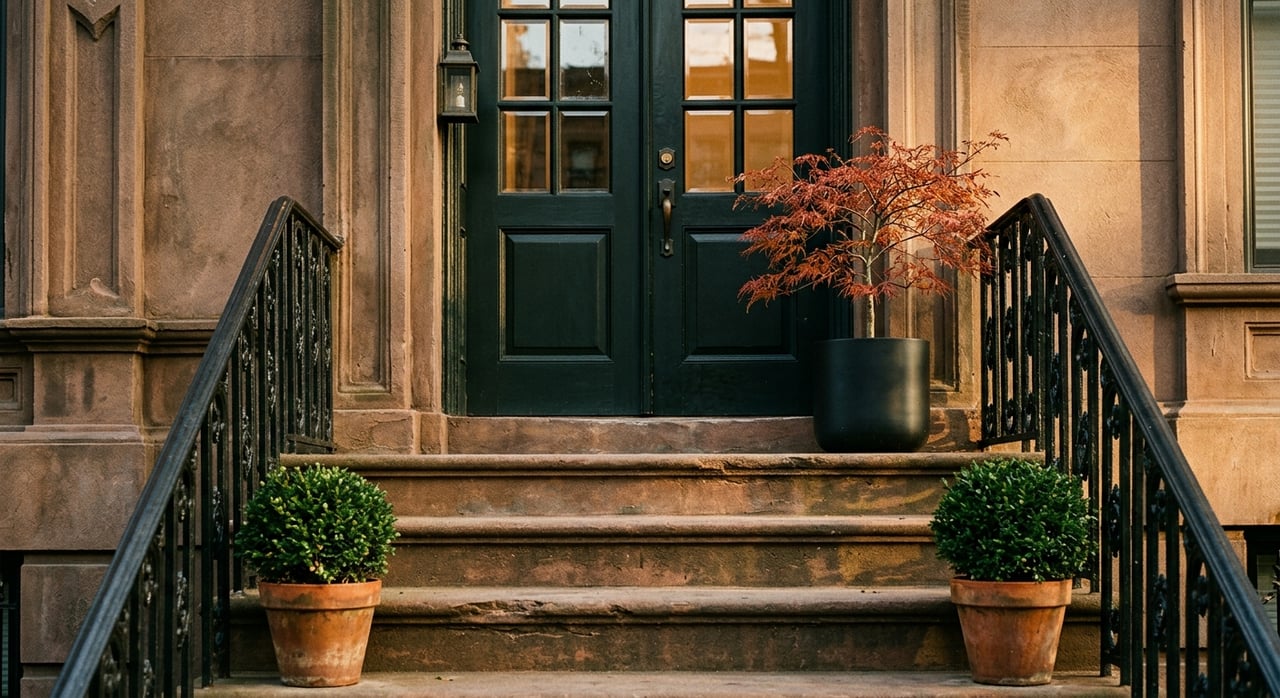
If you are thinking about trading square footage for a simpler Manhattan base, the West Village likely keeps coming up for a reason. It offers a rare mix of charm, walkability, waterfront access, and daily convenience, but buying a pied-à-terre here also means making smart choices about layout, building type, and long-term upkeep. If you want a smaller home that still feels like a true New York lifestyle upgrade, this guide will help you focus on what matters most. Let’s dive in.
Why West Village fits downsizers
A pied-à-terre works best when your neighborhood does a lot of the heavy lifting for you. In the West Village, that often means you can live comfortably with less private space because so much is available just outside your door.
The neighborhood stands out for its compact, highly recognizable street pattern and its dense mix of amenities. It is also one of the few parts of Manhattan that does not follow the standard grid, which adds to its distinctive feel and makes it one of the city’s most recognizable residential settings.
Another major advantage is access to the waterfront. Hudson River Park’s Greenwich Village section runs from Canal Street to Gansevoort Street and includes an uninterrupted esplanade, lawns, waterfront views, piers, tennis courts, a dog park, and other public amenities within a park system that draws more than 17 million visits a year.
For a downsizer, that combination matters. If your goal is a lock-and-leave home with strong park access, transit, dining, and cultural destinations nearby, the West Village can deliver that without requiring a large footprint.
What the housing stock looks like
One of the most important things to understand is that the West Village is not a uniform condo market. The housing stock reflects nearly two centuries of development, including early row houses and Federal-style homes, later tenements and apartment buildings, and former warehouses, stables, and factory buildings that were later converted to apartments.
That history creates variety, but it also creates inconsistency. You may see floor-through apartments in townhouses, compact co-ops in prewar buildings, condo conversions, loft-like homes in former commercial buildings, and newer high-rises closer to the Hudson River.
For you as a buyer, that means two homes with the same bedroom count can live very differently. A one-bedroom with great light and smart storage may feel more useful than a larger apartment with awkward angles, limited closets, or too many chopped-up rooms.
Why pricing changes the conversation
The West Village is a high-cost submarket by any measure in the research. Recent snapshots show a median sale price around $1.4 million to $1.475 million, an average home value of about $1.82 million, and a median asking price of $1.66 million, depending on the source and methodology.
The exact figures are not directly comparable, but the bigger takeaway is clear. This is a very expensive, high-demand neighborhood, so downsizing here is usually not just about spending less.
In many cases, it is about reallocating value. You may be giving up room count or storage in exchange for location, design character, convenience, and a home that is easier to lock and leave.
What makes a pied-à-terre work well
When you downsize, the right apartment is not always the one with the most square footage. It is the one that supports how you actually live when you are in the city.
Prioritize easy access
If this will be a part-time residence, access matters more than many buyers expect. A walk-up may feel charming during a showing, but carrying luggage, groceries, or weekend bags up multiple flights can get old fast.
That is why elevator access should be one of your first filters. If the building does not have one, think honestly about how often you plan to use the apartment and whether the tradeoff fits your routine.
Focus on storage first
In a smaller home, storage is not a bonus. It is part of whether the apartment functions well at all.
Look closely at closet space, built-ins, and whether there is room for seasonal items, extra linens, and the everyday essentials you do not want on display. If you expect occasional guests, think through where suitcases, bedding, and personal items will go when the apartment is in full use.
Think about length of stay
Some smaller homes work beautifully for a few nights at a time but feel tight during longer stretches. Before you buy, picture yourself there for a week or more.
Ask whether the kitchen, bath, seating area, and sleeping setup will still feel comfortable. A pied-à-terre should feel easy, not like a compromise you are constantly managing.
Natural light can outweigh size
Older West Village buildings often come with irregular layouts. In that setting, natural light and room flow can have a bigger impact than headline square footage.
A bright, efficient apartment can feel calmer and more usable than a larger but darker one. For many downsizers, that is the difference between a home that feels refined and one that feels cramped.
Building details matter in the West Village
Because so much of the neighborhood’s housing stock is older, your due diligence should go beyond finishes and staging. The New York State Attorney General advises buyers to review the offering plan and evaluate the building’s physical condition carefully.
That includes items such as the facade, roof, flooring, appliances, sub-soil conditions, elevators, HVAC, windows, electrical wiring, and plumbing. For existing buildings, the same guidance recommends reviewing board minutes and financial reports, which may reveal planned or recent work involving facades, roofs, elevators, boilers, plumbing, or electrical systems.
This is especially important when you are buying a smaller, higher-priced apartment. If the home is meant to simplify your life, surprise building issues can do the opposite.
Review maintenance history
Do not stop at the apartment itself. Look for patterns in building upkeep and capital needs.
If board minutes or financials show repeated concerns about facade work, elevator issues, plumbing replacement, or roof repairs, that may affect both your budget and your day-to-day convenience. In a pied-à-terre, reliability matters.
Understand what fees cover
Many buyers focus first on purchase price, but monthly costs matter just as much. Ask what maintenance or common charges cover and whether they align with the building’s condition and services.
That question becomes more important in a neighborhood where carrying costs per square foot may feel high relative to larger homes elsewhere. The goal is not just to buy smaller. It is to buy smarter.
Landmark rules can affect your plans
In landmarked parts of the West Village, exterior changes often require another level of review. According to the Landmarks Preservation Commission, owners of landmarked buildings and buildings in historic districts must obtain approval before most alterations involving exterior changes, reconstruction, demolition, or new construction.
Interior work is often exempt unless it affects the exterior or involves an interior landmark. Still, if you are buying with plans to replace windows, alter an exterior door, or make other visible changes, landmark status can affect timing and process.
For downsizers, this matters because many buyers assume a smaller home will be easy to tweak after closing. In the West Village, that may be true for some interior updates, but exterior-related work can be more involved than expected.
Budget for closing taxes too
In this price range, closing costs deserve early attention. New York State says the base real estate transfer tax is generally paid by the seller, while the 1% mansion tax on residences sold for $1 million or more is paid by the buyer.
That threshold is highly relevant in the West Village, where many homes meet or exceed it. If you are comparing a few properties, the mansion tax can materially affect your total cash needed at closing.
This is one reason local guidance matters in Manhattan purchases. A home that looks manageable on paper may feel different once you account for purchase price, monthly charges, and buyer-paid taxes at closing.
A simple downsizing checklist
Before you make an offer on a West Village pied-à-terre, keep this checklist in view:
- Is there an elevator, or is it a walk-up?
- How much real storage and closet space does the apartment offer?
- Will the layout work for occasional guests or longer stays?
- What do maintenance or common charges cover?
- What does the building’s repair history show for facade, roof, plumbing, HVAC, and elevator systems?
- Is the building landmarked or in a historic district?
- If you want to make changes later, will LPC approval be required for any exterior work?
- Is the purchase price at or above the mansion-tax threshold?
These questions may sound basic, but in the West Village they often separate a stylish-looking apartment from one that truly fits your life.
The real tradeoff of downsizing here
The biggest upside of a West Village pied-à-terre is clear. You gain a lock-and-leave base in one of Manhattan’s most established and convenient neighborhoods, with nearby access to destinations such as Hudson River Park, the Hudson River Greenway, Christopher Street PATH, 9 Street PATH, Washington Square Park, Jefferson Market Library, Film Forum, IFC Center, and other civic and cultural anchors.
The tradeoff is also clear. You are often giving up space, storage, and some ownership simplicity in exchange for location and lifestyle.
That is not necessarily a bad bargain. It just works best when you go in with a realistic eye toward access, storage, building condition, landmark status, and full carrying costs.
If you are considering a West Village pied-à-terre, the best next step is to define what “enough” really means for you. When your priorities are clear, it becomes much easier to spot the apartments that are worth pursuing and avoid the ones that only look good on first impression.
If you want experienced guidance on buying a smaller Manhattan home with fewer surprises and a clearer strategy, DTNYC Team can help you evaluate buildings, layouts, and closing considerations with the level of care a West Village purchase deserves.
FAQs
What makes the West Village a good place for a pied-à-terre?
- The West Village offers strong walkability, waterfront access, transit connections, and a dense mix of daily conveniences and cultural destinations, which can make a smaller part-time residence feel more practical.
What types of homes can you find in the West Village?
- Buyers may encounter townhouses, walk-ups, prewar co-ops, condo conversions, loft-like apartments in former commercial buildings, and newer high-rises near the Hudson River.
What should downsizers look for in a West Village apartment?
- Focus on elevator access, storage, natural light, layout efficiency, guest flexibility, and whether the apartment feels comfortable for the length of time you expect to stay there.
Why do building records matter when buying in the West Village?
- Building records can reveal important issues involving facades, roofs, elevators, plumbing, boilers, HVAC, and electrical systems, all of which can affect cost and convenience after closing.
How does landmark status affect a West Village property purchase?
- If a building is landmarked or in a historic district, many exterior alterations require Landmarks Preservation Commission approval, which can affect renovation plans and timing.
What extra tax should buyers expect in the West Village price range?
- Buyers should pay attention to the 1% mansion tax on residences sold for $1 million or more, since many West Village purchases meet or exceed that threshold.
