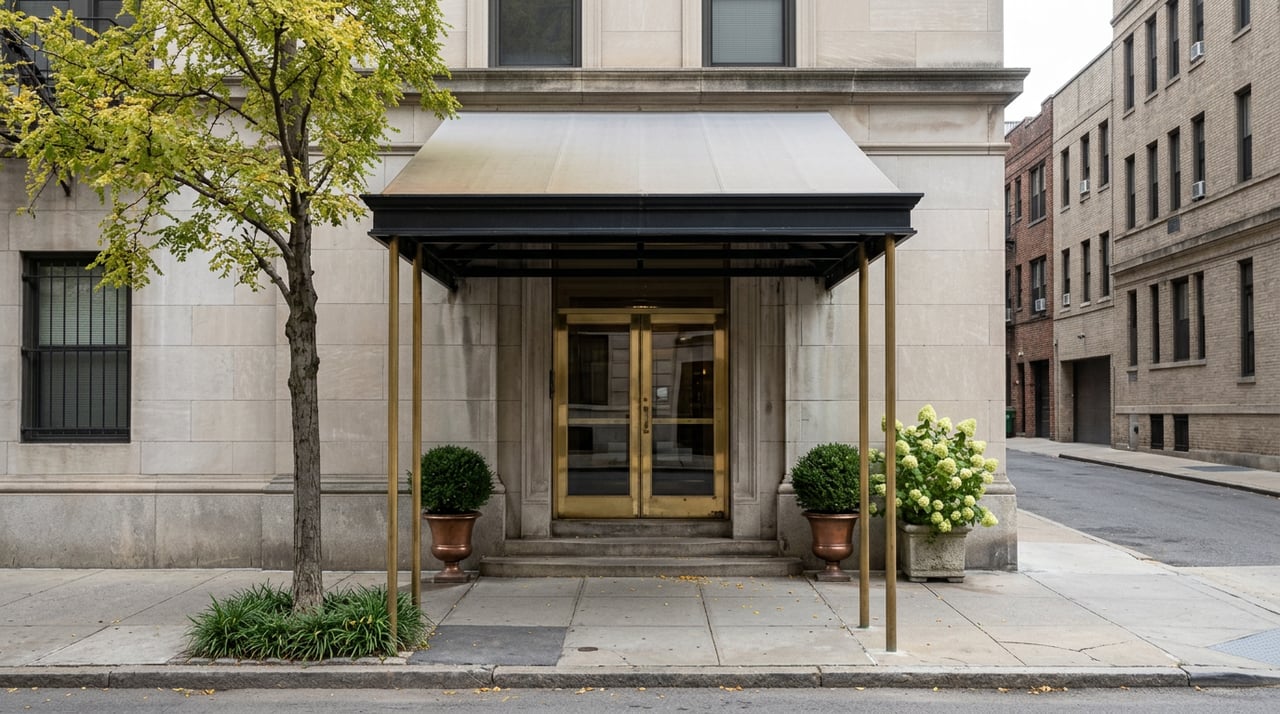
Ask anyone who has sold a co-op on the Upper West Side about the worst part of the process and most won't mention price. They'll mention the wait. The offer accepted, the mortgage commitment in hand, and then weeks of nothing while a volunteer board somewhere in the building decides on its own schedule whether the sale happens at all.
That specific kind of limbo is now against the law in New York City, at least on paper. Local Law 58 of 2026 took effect on July 28, giving co-op boards a hard 45-day clock to approve or deny a completed application. It sounds like the fix for the Upper West Side's most common closing complaint. It isn't quite that, and the gap between what the law changed and what buyers assume it changed is exactly where this neighborhood's co-op-heavy market still catches people off guard.
What the Law Actually Requires
The mechanics are specific. Once a buyer submits a board package, the co-op has 15 days to send written acknowledgment, by email and registered mail, stating whether the application is complete. If nothing is missing, or if the board simply misses that 15-day window, the application is deemed complete automatically and the second clock starts.
From there, the board has 45 days to approve, conditionally approve, or deny. A board gets one 14-day extension without the applicant's consent. Anything beyond that requires the buyer to agree in writing. Boards that don't meet during the summer can pause both clocks in July and August, but only if that recess policy was formally adopted and disclosed in advance, not applied after the fact. The New York City Department of Housing Preservation and Development enforces the timeline, with fines starting at $1,000 for a first violation and climbing for repeat offenses.
None of that existed before this summer. The City Council passed the measure in late January, overriding a mayoral veto, and it took effect roughly six months later. Rebecca Poole, executive director of the Council of New York Cooperatives and Condominiums, has said boards across the city had been preparing for the change since the vote, which suggests most Upper West Side co-ops walked into late July with some version of a written policy already in place, even if that policy hadn't been tested yet.
The Line Every Legal Summary Agrees On
Here is the detail that separates what buyers hope this law means from what it actually does: missing the 45-day deadline does not get you into the apartment. A board that blows through its clock owes a fine, not an approval. The applicant's remedy is a complaint to HPD, not the keys.
Boards also still don't have to explain a denial. They can reject an applicant for any lawful reason, including no stated reason at all, as long as the rejection doesn't cross into the protected categories barred under fair housing law. Advocates pushed for the law because the old process left too much room for open-ended silence and inconsistent handling, with no clock running and no obligation to say why an answer took as long as it did. What changed is the waiting. What didn't change is the board's authority to say no.
That distinction matters everywhere in the city, but it matters more on the Upper West Side than in neighborhoods where co-ops are the exception rather than the rule.
Why This Lands Differently Here
The Upper West Side is, structurally, a co-op neighborhood. Large prewar buildings along Central Park West and Riverside Drive make up the bulk of the housing stock, and StreetEasy's own neighborhood profile confirms co-ops remain central to the area's identity even as condo inventory has grown. That matters because a condo purchase never touches this law at all. Condominiums have their own right-of-first-refusal timelines built into their bylaws, and the City Council didn't extend Local Law 58 to them.
Which means the fix only reaches the transaction type the Upper West Side actually runs on. PropertyShark's April 2026 data put the neighborhood's overall median sale price at $1.85 million, with co-ops trading at a median of $1.4 million against $2.4 million for condos, a spread wide enough that most buyers who can't clear the condo price band end up in the co-op process almost by default. New condo supply isn't loosening that bottleneck either. Bloomberg has reported that only 51 new condo units are expected on the Upper West Side through 2028, and Corcoran's first-quarter 2026 Manhattan report found new-development launches running about 75% below the 10-year average borough-wide. Fewer new condos means more of the neighborhood's transaction volume routes through boards, which is exactly the population this timeline law was built to help and exactly the population still exposed to the part of the process the law doesn't touch.
The pace of the broader market backs this up. StreetEasy figures from March 2026 put the Upper West Side's median asking price at $1.8 million, with homes spending a median of 61 days on the market, faster than Corcoran's borough-wide average of 110 days that same quarter. Corcoran's March 2026 co-op and condo report also found signed contracts closing at a 1.2% discount from last asking price for co-ops, compared to 3.7% for condos, meaning co-op sellers here are already negotiating from a stronger position before a board ever gets involved. A predictable review clock is a real improvement on top of that. It's just not the whole story.
The Numbers the Law Never Touches
Every dollar figure a co-op board evaluates is still set by that individual board, not by the City Council. A general survey of NYC co-op requirements found buildings on the Upper West Side commonly asking for 20% to 25% down, a debt-to-income ratio around 28%, and two years of post-closing reserves, with long-term debts like car loans and student loans factored into that ratio. A separate industry overview found that in prewar buildings with strong financials, particularly on the Upper East Side and Upper West Side, that down payment requirement often climbs to 25% to 50%, with the most conservative buildings requiring all cash.
Put real numbers against that and the scale becomes clear. One recent worked example, current as of August 2026, modeled a $1 million co-op purchase with 20% down at roughly 6.5% on a 30-year mortgage and $1,800 in monthly maintenance. Closing costs, including a $10,000 mansion tax, ran about $25,000. Monthly carrying costs landed near $6,857. Clearing a 28% debt-to-income test at that carry level requires gross income around $294,000 a year. Add two years of post-closing liquidity, roughly $165,000, and the total liquid assets a buyer needs on hand come out to about $390,000, for a $1 million apartment. And not every asset counts the same way. Cash, savings, and brokerage holdings typically count in full. Retirement accounts are often counted at half value or excluded outright. Unvested equity and business ownership stakes are usually discounted or ignored.
None of that math has anything to do with Local Law 58. HPD can fine a board for missing its 45-day window. It has no authority over what down payment or liquidity a board decides to require. That decision still rests entirely with the co-op, which is why a completed application on the Upper West Side can now move through review on a predictable schedule and still get denied for the same reasons it always could.
Buildings the Law Doesn't Cover at All
The timeline law only applies to co-ops with 10 or more units. Smaller buildings, HDFC cooperatives, and Mitchell-Lama developments are exempt outright. That exemption matters here specifically. HDFC co-ops, which sell at a meaningful discount to market rate in exchange for income caps and resale restrictions, are concentrated in Harlem, the Upper West Side, the East Village, and the Lower East Side. A buyer targeting one of those buildings on the Upper West Side is still working under the old open-ended review process, with none of the new deadlines to lean on.
What Changes for Sellers
For a seller, a bounded review clock means a closing calendar that can actually be planned instead of guessed at, which affects how confidently a listing can be marketed around a target close date. It doesn't touch the other Upper West Side closing cost sellers should already be budgeting for: the flip tax. There is no citywide formula. Some buildings charge a flat percentage of the sale price, others charge per share, others use a tiered structure that scales with sale price or ownership length. On many Upper West Side co-ops it's customary for the seller to pay it, though the building's proprietary lease and bylaws control, not custom. That formula, along with any carve-outs for family or estate transfers, should be confirmed in writing from the managing agent before a listing goes live, not discovered at the closing table.
Before You Submit, Confirm
A few things are worth nailing down before that 15-day clock starts running, not after:
- The building's written transfer requirements and application policy, which co-ops are now required to maintain and provide on request
- The building's typical down payment and debt-to-income practice, since neither figure is published and both vary by building
- The flip tax formula and any transfer exceptions, in writing from the managing agent
- Whether the board has adopted a formal summer recess policy, if a submission falls near July or August
- Post-closing liquidity comfort beyond the board's stated minimum, since boards weigh the full financial picture, not just the headline number
A Few Direct Questions
Does the new law mean my board application will be approved faster? It means you'll get a decision within a bounded window, generally 45 to 60 days once the package is complete. It does not change whether that decision is yes or no.
Are all Upper West Side co-ops covered? No. Buildings with fewer than 10 units, HDFC cooperatives, and Mitchell-Lama developments are exempt, and the Upper West Side has a real concentration of HDFC buildings.
What actually happens if a board misses its 45-day deadline? HPD can fine the building, starting at $1,000 for a first violation. The applicant does not get automatic approval.
The Upper West Side's co-op market rewards buyers and sellers who know which parts of this process just got faster and which parts never moved at all. That's the distinction worth getting right before a single form goes to a managing agent, not after. If you're weighing a co-op purchase or sale on the Upper West Side and want a straight read on what a specific building's board will actually require, the DTNYC Team has been through this process building by building for years. Request a VIP Market Valuation and let's map out what your closing timeline really looks like.
