If you are weighing a prewar co-op against a new development condo on the Upper East Side, you are not alone. Both options offer real value, just in different ways. Your decision comes down to how you want to live, your financing plan, and how much flexibility you need over time. In this guide, you will get a clear, side-by-side comparison so you can choose with confidence. Let’s dive in.
Co-op vs condo basics
Understanding ownership structure helps you see why these homes feel and function differently. In a co-op you buy shares in a corporation and receive a proprietary lease to occupy the apartment. In a condo you buy real property and a percentage of common areas. This difference shapes board control, closing costs, and financing options (FS Residential explainer).
What this means for your timeline
- Co-ops: Expect a detailed board package and an interview before approval. Reviews can add weeks and outcomes are discretionary, which can affect timing and certainty (FS Residential).
- Condos: Approval is typically administrative, with lighter screening and faster closings.
Manhattan-wide reporting continues to show condos trading at higher medians than co-ops, a pattern that frames many budget decisions (Miller Samuel / Douglas Elliman, cited in The New York Times, Jan 2026). On the UES, neighborhood medians have generally sat in the low to mid 1-million range in late 2024 through early 2026, with exact figures varying by source and month (research summary).
Layouts and finishes
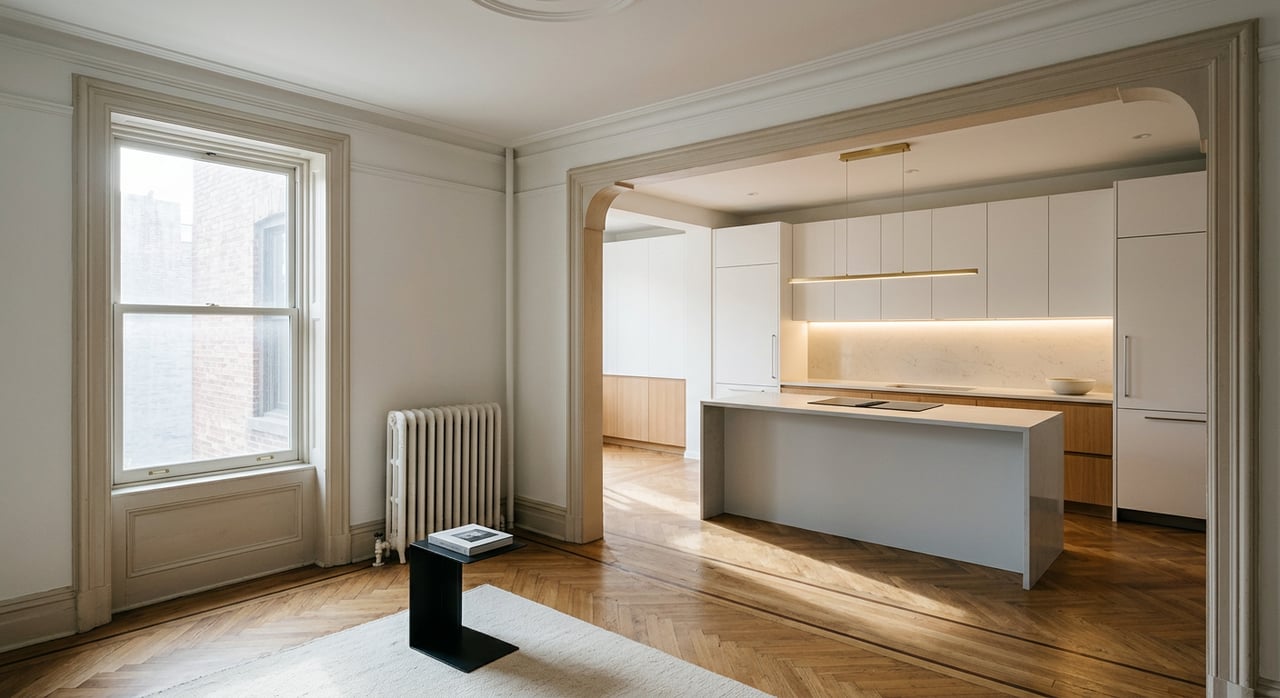
Prewar co-ops on the UES often feature center-hall plans and the beloved classic six or seven layout with high ceilings, defined rooms, and architectural detail. Think separate dining rooms, bedroom wings, millwork, and parquet floors. The scale and flow are major selling points for daily living and entertaining (What is a classic six).
New development condos lean modern and open. Expect kitchens with islands, multiple en-suite baths, larger closets, high-performance systems, and floor-to-ceiling windows. Recent UES projects highlight amenity-rich, light-filled living with integrated appliances and contemporary finishes (WSJ luxury UES example).
Scale vs openness
- If you prize room scale, separation of public and private spaces, and prewar detail, prewar co-ops shine.
- If you value sightlines, light, and contemporary design, newer condos deliver.
Amenities and services
Prewar co-ops typically focus on service. Many are considered white glove, with a doorman, live-in super, and staff who know residents well. Amenities vary by building size and vintage. Iconic Park and Fifth Avenue co-ops set the tone for attentive service on the UES, illustrated by listings like 1192 Park Avenue.
New developments often include full amenity suites that can cover a fitness center, pool, lounge, roof deck, children’s playroom, dining room, and pet spa. Expanded amenities are a key reason buyers accept higher pricing in newer condo buildings (WSJ UES example).
Monthly costs explained
The monthly math works differently for co-ops and condos. To compare apples to apples, add everything you pay each month, not just the advertised fee.
- Co-ops: You pay a single maintenance fee that typically includes your proportionate share of the building’s operating costs, real estate taxes, insurance, staff, and sometimes debt service. Your total monthly outlay is maintenance plus your mortgage, if any (FS Residential).
- Condos: You pay common charges for building operations and reserves, plus your unit’s individual real estate tax bill, plus your mortgage if applicable. Amenities and services can move these numbers up or down (FS Residential).
Tip: When you tour properties, request a current maintenance or budget breakdown and ask about any scheduled increases or assessments.
Purchase, financing, and closing costs
Down payments and approvals
- Co-ops: Boards and lenders are often more conservative. Co-ops commonly expect 20 to 30 percent down, with some buildings requiring 25 to 50 percent and specific post-closing liquidity. Board policies can disqualify buyers even when a bank would approve them (Skybriz co-op guide).
- Condos: You will usually find a wider range of mortgage programs, often with lower minimum down payments than co-ops, subject to building and lender rules. FHA and VA financing are more common in condos than co-ops.
Closing costs to budget
- Mortgage Recording Tax (condos with financing): Typically 1.80 percent for mortgages under 500,000 dollars and 1.925 percent for 500,000 dollars or more in New York City. This tax does not apply to co-op share loans because co-ops are not real property (NYC Mortgage Recording Tax overview via closing cost guide).
- Mansion Tax (all residential, price-based): Begins at 1 percent for 1,000,000 dollars to 1,999,999 dollars and scales up to 3.9 percent at 25,000,000 dollars and above. Check current brackets before you sign a contract (NYS Tax Dept).
- Real Property Transfer Tax (RPTT): The city transfer tax varies by property type and price. For 1-3 family homes and individual residential condo or co-op units, rates are typically 1 percent up to 500,000 dollars and 1.425 percent above 500,000 dollars. Confirm current tiers and who pays in your deal structure (NYC Department of Finance).
Because tax rules change, always confirm the latest rates and responsibilities with your attorney and review the official pages above before relying on any estimate.
Subletting and investment fit
Co-ops often limit subletting, require board approval for each sublet, and may ask owners to occupy for a set period before renting. Condos are usually more flexible, which is why investors and pied-à-terre buyers tend to prefer them (FS Residential). Short-term rentals are tightly regulated citywide and buildings can add their own restrictions. Review local rules before you plan any rental strategy, and keep an eye on updates from organizations like the Council of New York Cooperatives & Condominiums.
Due diligence checklist
Before you make an offer, ask for the building documents that help you see around corners.
For co-ops
- Audited financial statements, minutes for the last 6 to 12 months, proprietary lease and bylaws, house rules, flip-tax formula, assessment history, and the building’s stated financing policy. Low reserves, frequent assessments, or deferred capital projects are red flags.
For condos and new developments
- Offering plan and amendments, declaration and bylaws, annual budget, reserve study, minutes, insurance, and any pending litigation or assessment notices. The New York State Attorney General regulates offering plans and publishes buyer guidance. Review these materials closely for sponsor obligations and timelines (NYS Attorney General).
Buildings of any vintage
- Check recent repairs and capital projects, DOB violations or open permits, Local Law 11 facade work cycles, and Local Law 97 energy compliance plans. Ask about roof, boiler, elevator, and plumbing-stack timelines in older properties.
Quick comparison: prewar co-op vs new condo
| Category | Prewar Co-op | New Development Condo |
|---|---|---|
| Ownership | Shares in a corporation, proprietary lease | Deeded real property interest |
| Approval & timeline | Full board package and interview, longer and discretionary | Administrative review, often faster |
| Layout & finishes | Classic six/seven, high ceilings, formal rooms, historic detail | Open plans, modern systems, floor-to-ceiling windows |
| Amenities & services | White-glove service, doorman, live-in super, storage varies | Full suites, fitness, pool, lounges, roof decks |
| Monthly costs | One maintenance fee that typically includes taxes | Common charges plus individual tax bill |
| Financing | Often higher down payment and liquidity expectations | Wider mortgage options, lower minimums more common |
| Subletting | Often limited with approvals | Usually more flexible, subject to building rules |
Match your priorities to the right fit
- You want character and space per dollar: Focus on prewar co-ops. Classic layouts, graceful proportions, and established communities often deliver strong value on the UES.
- You want amenities and resale flexibility: Lean toward new development condos. You will likely trade some prewar character for modern convenience and simpler approvals.
- Financing matters most: Co-ops often require more cash up front and stronger liquidity. Condos usually permit a broader set of loan programs and may allow lower down payments for qualified buyers (Skybriz co-op guide).
The Upper East Side remains a diverse market with options on both ends of this spectrum. Manhattan-level reporting continues to show a price gap between co-ops and condos, which supports strategic tradeoffs by buyers (Miller Samuel / Douglas Elliman, NYT, Jan 2026). If you compare two homes, make sure you are weighing total monthly costs, approvals and timing, and your long-term living plan.
Ready to zero in on the right building and negotiate with confidence? Connect with the DTNYC Team for hands-on guidance, board package expertise, and a curated list of UES options that fit your lifestyle and budget.
FAQs
What is a “classic six” on the Upper East Side?
- A classic six is a prewar layout with a living room, formal dining room, kitchen, two bedrooms, and a smaller third room historically used as a maid’s room, plus one or two baths. Buyers value the high ceilings and separated bedroom wing (see overview of classic six layouts linked above).
How do co-op monthly fees compare to condo costs on the UES?
- Co-op maintenance typically includes your share of building taxes and operations, while condo owners pay common charges plus an individual tax bill. Always compare total monthly outlay, not just one line item (FS Residential).
What closing costs should I expect for a UES condo purchase?
- If you finance, expect Mortgage Recording Tax, title insurance, and the New York State Mansion Tax starting at 1 percent for homes priced 1,000,000 dollars and up. Confirm city RPTT and state transfer tax responsibilities and rates with your attorney (NYC DOF, NYS Tax Dept).
Are short-term rentals allowed in UES condos or co-ops?
- City laws restrict short-term rentals, and most buildings add their own rules. Many co-ops limit subletting even for longer terms. Review governing documents and check building policies before you buy (CNYC).
Which is better for an investor on the Upper East Side?
- Condos usually offer more flexible leasing and deeded ownership that can be easier to finance and resell. Co-ops often suit long-term owner-occupants who value stability and unit scale (FS Residential).
