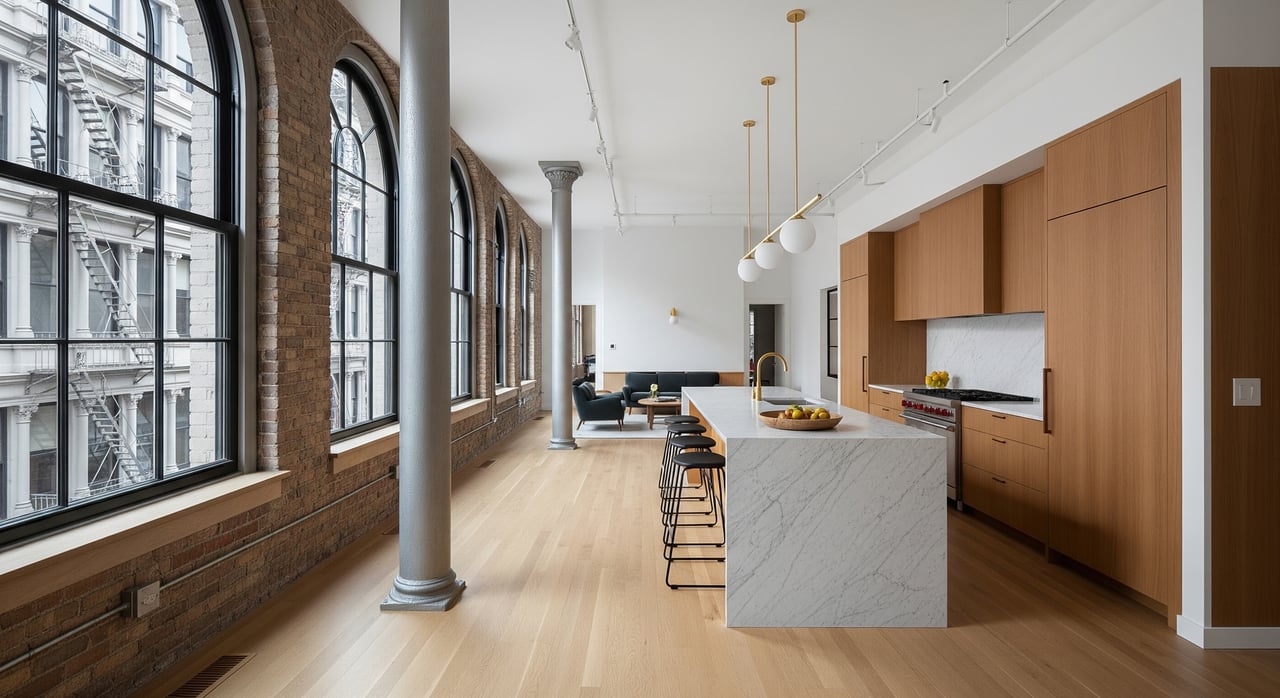
Planning a SoHo loft renovation can feel like a maze of acronyms, permits, and approvals. You want a seamless build with beautiful results, not delays or surprises. In this guide, you’ll learn what the Landmarks Preservation Commission (LPC) regulates in the SoHo–Cast Iron Historic District, how NYC Department of Buildings (DOB) permits work, common pitfalls to avoid, and realistic timelines. Let’s dive in.
LPC rules in SoHo
LPC protects the character of the SoHo–Cast Iron Historic District. That means most exterior, street-visible work needs LPC review. Facades, storefronts, windows that can be seen from the street, cornices, sidewalk-level features, and visible rooftop additions typically require LPC approval.
Most interiors are not regulated by LPC if the work is not visible from the public way. If your interior scope requires exterior changes, such as new vents, a rooftop bulkhead, or storefront modifications, LPC will need to review those items. Plan to separate exterior and interior scope early so you can route each item to the correct approval path.
DOB permits you may need
DOB enforces building and fire code and issues the permits that allow work to start. Even if LPC is not involved, most significant interior renovations require DOB filings. Expect sealed drawings from a licensed New York architect or engineer for plan examination on larger jobs.
Common DOB permits and filings include:
- Construction permits for alterations or structural work
- Plumbing and mechanical permits filed by a master plumber
- Electrical permits filed by a master electrician
- Fire protection or sprinkler permits when required
- Sidewalk shed or exterior work permits for facade repairs
- Certificate of Occupancy updates when use or occupancy changes
Most filings run through DOB NOW: Build and will need inspections and final sign-offs to close permits.
Permit types and sequencing
When exterior, street-visible features are affected, you will likely need LPC action before DOB issues related permits. The typical LPC documents and outcomes include:
- Certificate of Appropriateness for work that changes historic materials or forms, or for visible rooftop additions
- Letters or determinations of No Effect when LPC finds the work does not affect protected features
- Staff-level permits for minor exterior repairs or in-kind restorations
- Public hearings for complex storefronts, window programs, or rooftop additions
For DOB, plan exam time varies with scope and submission quality. Complete, coordinated drawings help reduce rounds of corrections. Master plumbers and electricians file their own permits tied to your main application.
Sequence matters. Secure LPC approval for exterior items first or in tandem with design so DOB submissions can reference LPC decisions as needed.
Common loft pitfalls in SoHo
Older cast-iron and masonry buildings hide surprises. Plan for these common issues:
- Wet-over-dry bathrooms or kitchens. Placing new wet areas over occupied spaces without proper waterproofing, drains, slope, and structural support can cause leaks, code issues, and costly remediation. Licensed design professionals must detail these assemblies, and plumbers must sign off.
- Mezzanines and sleeping platforms. Size, height, guardrails, stairs, and egress rules can turn a simple loft idea into a code trigger. If a mezzanine functions like another level, you may face added egress or fire protection requirements.
- Windows and storefronts. SoHo’s windows and cast-iron storefronts are defining features. Replacements usually require LPC review and historically appropriate profiles and materials.
- Rooftop equipment and bulkheads. If visible from the street, expect LPC scrutiny on height, setbacks, and materials. DOB will also review structure, loads, and fire separation.
- Structural changes and party walls. New openings, penetrations, or loads require structural analysis and DOB-approved plans. Neighbor agreements can add complexity.
- MEP upgrades in old buildings. New HVAC, plumbing, or electrical often reveals deferred maintenance, lead or asbestos, and obsolete systems that expand scope.
- Unpermitted past work. Many SoHo lofts carry legacy alterations. Legalizing them can require corrective work, retroactive permits, and extra time.
Realistic timelines
Every project is unique, but these planning ranges are common:
- Pre-design and due diligence: 2 to 8 weeks for permit history review, board rules, surveys, and initial measurements
- Design and documentation: 4 to 12+ weeks for drawings, engineering, and LPC packet prep if exterior work is included
- LPC review and approval: a few days to a few weeks for minor staff-level items; 4 to 12+ weeks for hearings or complex, visible changes
- DOB plan exam and permit issuance: 4 to 16+ weeks depending on scope, completeness, and corrections
- Construction: 1 to 3 months for small interior scopes; 3 to 9 months for moderate gut work; 6 to 18+ months for full gut conversions with structural and use changes
- Inspections, sign-offs, and CO updates: 2 to 12+ weeks, longer if violations exist or a Certificate of Occupancy must be amended
Simple interior projects with clean filings can move from design start to permits in 1 to 3 months, with another 1 to 3 months to build. Complex projects that involve LPC hearings, structural changes, or change of use can take several months to a year or more before construction even starts.
Owner checklist
Use this quick list to stay organized and reduce risk:
Pre-purchase due diligence
- Review prior permits, COs, LPC approvals, and violations
- Ask for condo or co-op alteration rules and board approval timelines
- Hire an architect or engineer with historic-district experience
- Commission a structural, plumbing, and electrical scope survey
Before filing
- Document current conditions with detailed photos
- Separate exterior-affecting items for LPC from interior-only items for DOB
- Prepare elevations, materials, and photo documentation early if exterior work is planned
During approvals
- Seek LPC approval on exterior items before DOB permit issuance
- Expect DOB corrections and resubmissions
- Confirm whether a change of use or amended Certificate of Occupancy will be required
Construction and closeout
- Keep a complete trail of approvals, permits, inspections, and shop drawings
- Avoid scope changes without permits
- Secure final DOB sign-offs and any CO amendments to protect resale
Costs and fees overview
LPC application fees are typically modest compared with construction costs. The larger near-term expenses are professional services to prepare LPC-quality submissions and DOB-ready drawings. DOB permit fees scale with job value and scope. If you uncover unpermitted work, water damage, or hazardous materials, expect both cost and time to increase.
Closeout and resale readiness
A clean closeout saves time when you sell. Unclosed permits, missing sign-offs, or undocumented changes can derail deals, create violations, or raise insurance questions. Keep organized records throughout design and construction. Make sure every permit receives a final sign-off and that any required Certificate of Occupancy update is issued.
Work with a local team
Coordinating LPC and DOB while managing a board approval and a construction schedule takes planning. You want a team that understands SoHo’s historic context, NYC codes, and board processes. If you are buying or preparing to renovate for resale, a clear strategy can help you time the market and your build with less stress.
If you would like a hands-on partner to align due diligence, board approvals, and vendor coordination, the DTNYC Team is here to help you plan the path from concept to close.
FAQs
Does LPC regulate SoHo loft interiors?
- LPC typically regulates exterior, street-visible work; purely interior work is generally outside LPC unless it affects visible features or a specific interior landmark applies.
What DOB permits do I need for a SoHo renovation?
- Most significant projects need a construction permit plus separate plumbing, electrical, and mechanical filings, with inspections and sign-offs to close the permits.
How long do LPC approvals take in SoHo?
- Staff-level items can take days to weeks, while projects requiring a public hearing often take 4 to 12+ weeks from filing to decision.
Can I add a rooftop bulkhead or deck?
- Rooftop additions or equipment visible from the street usually require LPC approval and DOB review for structure, loads, fire separation, and setbacks.
What is wet-over-dry and why is it risky?
- Placing new bathrooms or kitchens over occupied spaces without proper waterproofing, drainage, and structural support can cause leaks, code issues, and costly remediation.
Will my renovation require a new Certificate of Occupancy?
- If you change use or occupancy, such as converting a commercial space to residential, you may need an amended Certificate of Occupancy, which adds time and code requirements.
