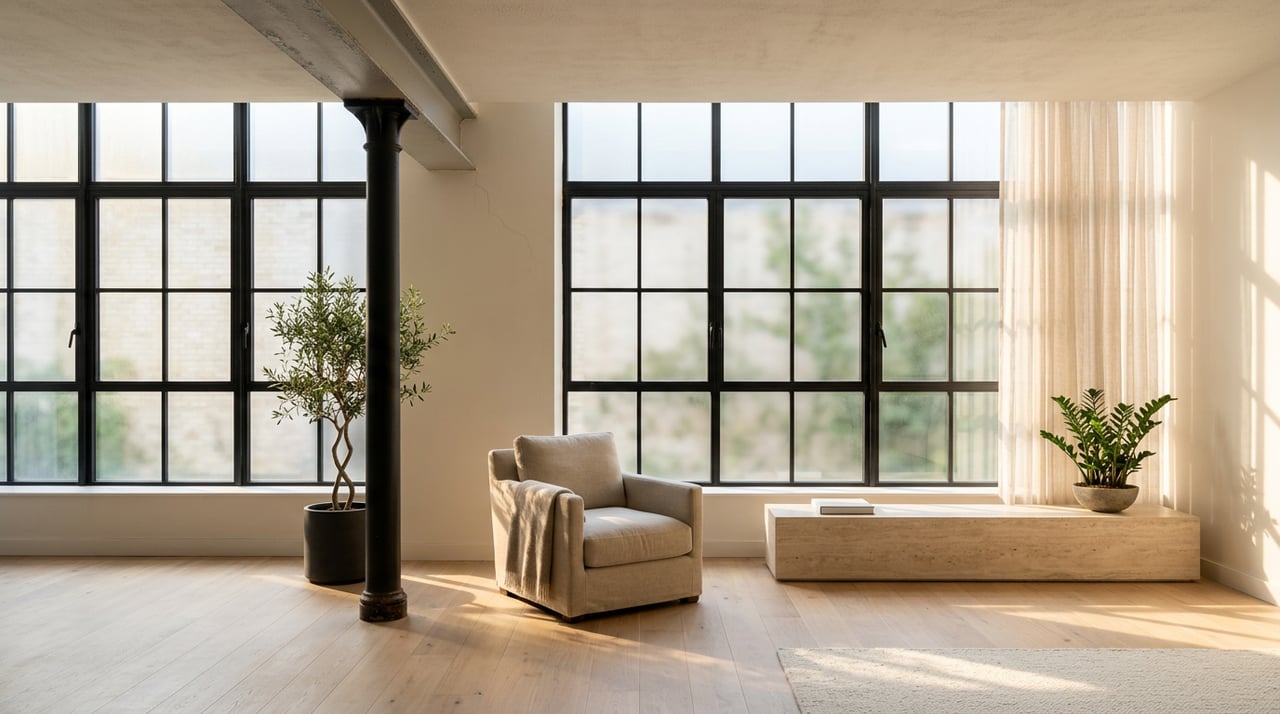
For fifty years, buyers of SoHo lofts signed a "SoHo letter" acknowledging the unit's Artist-in-Residence designation
The fee’s legal status changed on January 13, 2026, when the New York Court of Appeals ruled 6-1 in favor of the city in Matter of the Coalition for Fairness in SoHo & NoHo, Inc. v. City of New York, upholding a $100-per-square-foot fee that non-artists must pay to convert a Joint Living-Work Quarters for Artists unit to unrestricted residential use. The rule now has a price tag and a court decision behind it, and the fee is increasingly part of negotiations. If you're buying, selling, or sitting on a SoHo or NoHo loft with JLWQA on its certificate of occupancy, the fee may affect the unit's asking price.
What the Court Actually Decided
The case traces back to the city's 2021 SoHo/NoHo rezoning, which created a voluntary path for JLWQA units to convert to standard residential use. The catch was the price: a one-time, nonrefundable payment to the city's Arts Fund, calculated at $100 per square foot of floor area being converted. A group called the Coalition for Fairness in SoHo & NoHo sued, arguing the fee was an unconstitutional taking under the Fifth Amendment. In December 2024, New York's Appellate Division agreed and blocked the city from collecting it.
The Court of Appeals reversed that decision. Writing for the majority, Judge Jenny Rivera reasoned that the fee doesn't touch a protected property interest because JLWQA owners already hold what they always held, a restricted unit, and the city is simply offering an optional upgrade for a price. The lone dissent, from Judge Michael Garcia, argued the opposite: that a mandatory payment tied to a land-use permit is exactly the kind of exaction the Supreme Court's Nollan and Dolan decisions were meant to check. You can read the full decision on the New York courts' official reporter.
The fight isn't over. The Coalition, represented by the Pacific Legal Foundation, filed a petition asking the U.S. Supreme Court to hear the case, and as of late summer 2026 that petition remains active on the Court's docket. Attorneys following the case have told reporters that even a favorable outcome is well over a year away. Meanwhile, City Council member Christopher Marte, whose district covers SoHo, is pursuing a local bill to shrink the fee to something closer to nominal. Nothing about either effort changes what's enforceable today.
What the Number Actually Costs
The fee isn't abstract. It scales directly with square footage, and lofts in this neighborhood tend to run large, as the Coalition's own public explainer illustrates.
| Unit Size | One-Time Arts Fund Fee |
|---|---|
| 2,500 sq ft | $250,000 |
| 5,000 sq ft | $500,000 |
That figure also climbs. Council member Marte has cited an annual increase of roughly 3 percent built into the fee structure, as amNewYork reported, so the number a buyer faces today is not the number they'll face in three years. Roughly 1,600 loft residences across SoHo and NoHo still carry the JLWQA designation, according to reporting on the case earlier this year, which means this isn't an edge case. It's a meaningful slice of the neighborhood's housing stock sitting on paper that just became a lot more expensive to change.
Why Settling the Law Didn't Settle the Price
Here's the part that surprises people who've followed SoHo real estate for a while: resolving the legal uncertainty around this fee didn't stabilize prices on JLWQA units. It gave buyers a number to subtract.
For decades, nobody could put a dollar figure on the risk of buying a loft that technically required artist certification, because nobody knew if or when the city would ever collect anything. The uncertainty could work in sellers' favor: a buyer's attorney could flag the JLWQA status, and the deal could close near asking price while enforcement remained uncertain. Once the Court of Appeals confirmed the fee is real and collectible, buyers had a concrete cost to consider. According to a SoHo neighborhood bulletin published after the ruling, prospective non-artist buyers of units still carrying a JLWQA certificate of occupancy are already citing the fee in negotiations and seeking price reductions from sellers to account for the eventual conversion cost.
Zigi Ben-Haim, an 80-year-old artist who has lived in his SoHo loft since 1979, told amNewYork after the ruling that he had no idea how he and his neighbors would handle the fee when the time came to pass their units down or sell. That uncertainty is precisely what a buyer's attorney now has leverage to point to.
The Part That Trips People Up: It's Not Just Your Unit
The Coalition's own public explainer describes a scenario where converting a lower-floor unit to bring in additional light and air can trigger conversion requirements for a certified artist several floors up in the same building, because the JLWQA framework treats the building's use pattern as connected. Before you assume your unit's status is a private matter between you and the city, ask your board how many other apartments in the building still carry the designation and whether any conversions are already in motion.
Financing adds another layer. Conventional lenders generally want a clean residential certificate of occupancy before writing a standard mortgage. A unit sitting on a Temporary Certificate of Occupancy or still coded as JLWQA can push buyers toward cash purchases or specialty lending with higher rates and larger down payments, which shrinks your buyer pool regardless of what the fee itself costs.
What to Actually Check Before You Sign Anything
- Pull the current certificate of occupancy and confirm whether it lists JLWQA use, a residential designation, or a temporary status pending further legalization.
- Ask whether the building received its JLWQA certificate of occupancy before 1982. Buildings that did are subject to the Arts Fund fee. Roughly half of JLWQA buildings, developed after 1982, fall under the state's Interim Multiple Dwelling law and were specifically exempted from the conversion fee under a 2023 settlement between the city and the Coalition, according to BBG LLP.
- Confirm whether the current occupant moved in on or before December 15, 2021. A 2022 amendment to the state's Multiple Dwelling Law allows non-artist occupants who were already living in a unit by that date to remain legally without paying to convert.
- Ask the board for its Loft Board registration history if the building has one, and check for open Orders to Comply.
- Get a written cost estimate for conversion tied to the unit's actual square footage before you factor any discount into an offer.
You can review the city's own conversion process, including who qualifies and how certification works, through the NYC Department of Buildings' official JLWQA guidance page.
Frequently Asked Questions
If my building is a registered Interim Multiple Dwelling, do I still owe the fee? IMD units are exempt from the Arts Fund fee under a 2023 settlement. Confirm the registration number and status directly with the Loft Board before assuming either way.
What if I have no plans to sell or convert? The fee only applies when you pursue conversion, and current occupants who moved in before December 15, 2021 aren't required to convert to keep living there. The exposure shows up at the next sale, when a buyer's financing or negotiating position runs into the unresolved status.
The legal questions around this fee will keep moving through the courts for a while yet. The transaction questions won't wait. If you're weighing a SoHo or NoHo loft purchase or sale and want a clear read on what a specific unit's paperwork actually means for price and timeline, the DTNYC Team can walk through it with you. Request a VIP Market Valuation and we'll help you evaluate the unit's market position before you make a move.
This article is general information, not legal, tax or financial advice. Consult a qualified professional about your situation.
