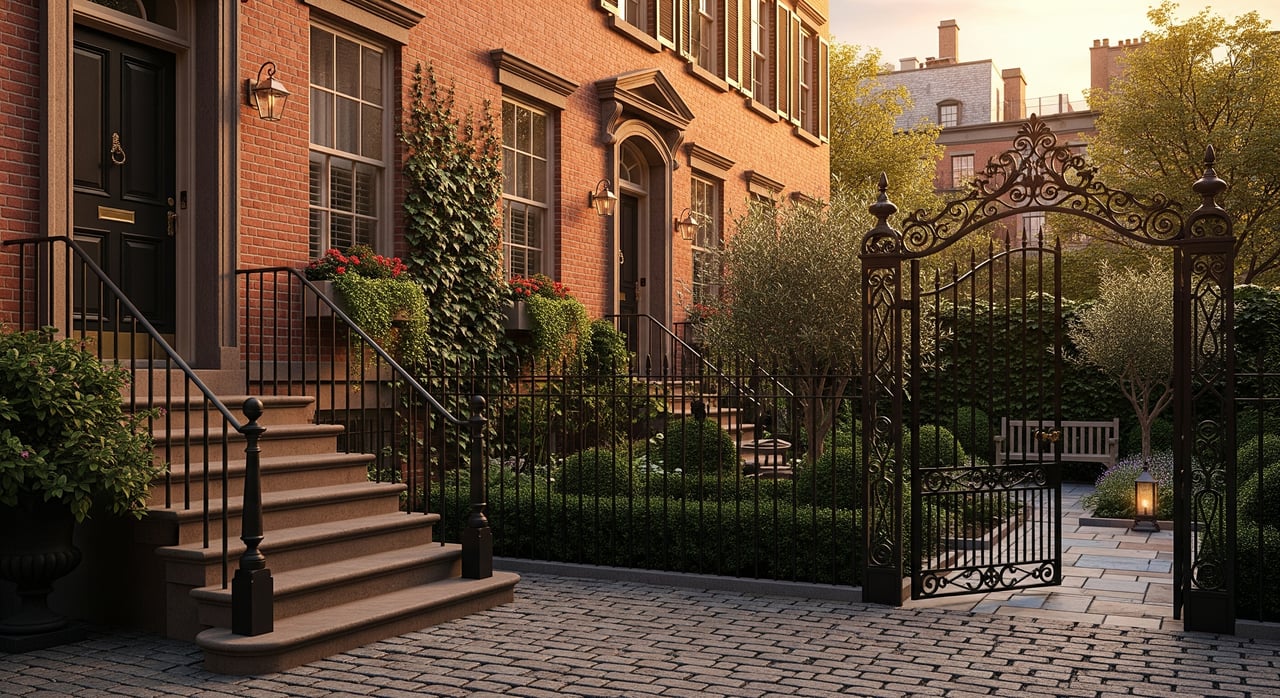
Thinking about a West Village townhouse but unsure what living with mews, gardens and landmark rules really means day to day? You are not alone. Townhouses here deliver timeless character and privacy, yet they also come with unique approvals, maintenance needs, and access quirks. This guide breaks down the essentials so you can plan with confidence and enjoy the lifestyle you are envisioning. Let’s dive in.
West Village townhouse character
Townhouses in the West Village are largely 19th‑century brick or brownstone rowhouses with stoops, raised or English basements, and multi‑story layouts. Many sit on narrow, deep lots with rear yards and period details like cornices and original window profiles. You also see former carriage houses and mews homes, which add variety to a streetscape known for short blocks and a human‑scale feel. Some houses are single‑family, while others are one‑ to four‑family or subdivided into apartments.
Mews living: charm and access
Mews are small alley‑like streets historically used for stables and service activity. Today, they often feel quieter and more private, sometimes with restricted vehicular access. The architecture can be distinctive, and many mews homes have direct access to small courtyards or rear yards.
Benefits
- Privacy and a calmer streetscape.
- Unique façades and layouts that stand out.
- Direct connections to small outdoor areas.
Constraints
- Tight access for deliveries, equipment, and scaffolding.
- Complex logistics for larger renovations or crane use.
- Limited curbside space and sometimes restricted street rights.
Gardens and outdoor space
Rear yards in the West Village range from small planted spaces to larger private gardens and occasional shared block gardens. Many backyards sit over cellar space, have retaining walls, and are lined by party walls. Drainage and waterproofing matter because shallow yards and close tree roots can push water toward foundations.
- Plan for proper grading, French drains, and sump pumps where needed. The NYC Department of Environmental Protection offers stormwater and drainage resources that help you understand best practices.
- Large trees and any work near street trees may need attention. Review guidance from NYC Parks before planning tree work.
- If a garden or alley is shared, confirm the arrangement in title and survey. Community gardens exist nearby too, but they have separate rules and are different from private yard rights.
Landmark rules and approvals
Much of the West Village falls within historic districts or includes individually designated landmarks. If your home is within these protections, exterior work visible from a public way typically requires review by the New York City Landmarks Preservation Commission (LPC). You can learn more and find district maps on the LPC website.
What triggers review
Exterior changes that alter public‑facing appearance usually need LPC approval. Common examples include façade repair or reconstruction, masonry repointing that changes appearance, stoop work, window replacements on visible elevations, front doors, signage, and rooftop additions visible from the street. Purely interior work often does not require LPC review, but it can still need NYC Department of Buildings permits.
How approvals work
A typical sequence is: consult LPC guidelines, retain an architect or preservation consultant, prepare drawings and specs, submit an LPC application, complete review and any public hearing, obtain LPC documents, then seek Department of Buildings permits and perform work. Simple in‑kind repairs can be approved relatively quickly. Projects with visible material changes, reconstructions, or additions can take several months.
Materials and methods
LPC guidance emphasizes retaining historic material where feasible and using appropriate replacements. Expect attention to details like mortar composition and tooling for masonry. When modern materials are proposed, LPC looks at visual compatibility and reversibility. Mock‑ups or samples are common for review.
Time and cost impact
Landmark status often increases the time and cost for exterior projects due to specialized trades and review requirements. Non‑compliance can result in stop‑work orders, fines, and required restoration, so build approvals into your project plan upfront.
Maintenance and ownership realities
Owning a historic townhouse means periodic large projects alongside routine upkeep. Typical items include:
- Masonry and brownstone repairs, façade cleaning, and cornice work.
- Stoop and rail restoration with code‑compliant handrails.
- Roof replacement or membrane work, flashing, and leak mitigation.
- Historic window repair, weatherproofing, and potential storm panels.
- Cellar waterproofing and drainage improvements where needed.
- Mechanical upgrades: boilers, domestic hot water, and ventilation.
- Electrical updates for modern loads and safety.
- Plumbing updates for older piping and soil stacks.
Full interior renovations are common, but costs can be higher than apartment renovations due to logistics, code upgrades, and the need for specialized trades. Choosing contractors who understand historic masonry, carpentry, and the LPC process is important.
Regulatory and safety basics
Even when LPC is not involved, most significant work still requires Department of Buildings filings. Use the NYC Department of Buildings resources to review permits, job history, and violations for a property you are considering.
- Lead‑safe practices: For pre‑1978 housing, the EPA Renovation, Repair and Painting Rule applies when work may disturb lead paint. Review the EPA RRP program and use certified contractors.
- Street trees and large private trees can involve additional permissions. See NYC Parks tree guidance.
- Stormwater and drainage can affect both yards and cellars. The NYC DEP provides helpful references for planning.
Lifestyle pros and tradeoffs
Pros
- Architectural character and a strong sense of place.
- Private outdoor space for gardening or gathering.
- Direct ownership and street presence, including stoop culture.
Tradeoffs
- Higher maintenance and more unpredictable capital projects than condos.
- Added complexity for exterior changes due to landmark rules.
- Renovation logistics on tight urban lots, especially in mews.
- Possible shared or informal agreements with neighbors for alleys or gardens.
Buyer due diligence checklist
Use this checklist to evaluate a specific West Village townhouse before you offer:
- Title and survey: Confirm lot lines, easements, party walls, air‑rights transfers, and any covenants or shared garden or alley agreements.
- Landmark status: Determine whether the home is in an LPC district or individually designated. Review past LPC approvals for the property via the LPC site.
- Building systems and envelope: Commission a comprehensive inspection plus targeted specialists for structure, plumbing, electrical, and historic masonry or façade conditions.
- Mechanical systems: Check boiler and hot water age, electrical capacity, gas service, and any history of water infiltration or flooding.
- Permits and violations: Review DOB job filings and violations and investigate any open permits or prior LPC violations.
- Renovation feasibility: Assess access for scaffolding and equipment, staging, and storage. Factor in LPC and DOB timelines for planning.
- Insurance and financing: Get insurance quotes that reflect building age and materials. Speak with lenders about mortgage options for one‑ to four‑family properties and renovation financing.
- Neighborhood specifics: Research block‑level features like mews alleys, garden associations, street trees, and typical traffic or noise patterns.
How to plan your first year
Start with a clear maintenance plan and a reserve for projects you may inherit. Prioritize water management and envelope integrity, such as roof, flashing, gutters, and cellar waterproofing. If you are considering any visible exterior work, consult the LPC guidelines and application process early. For any structural, plumbing, or electrical upgrades, coordinate filings through the NYC Department of Buildings.
A West Village townhouse can be a deeply rewarding long‑term home if you plan for approvals, access, and periodic capital work. When you want help weighing tradeoffs, reviewing records, or mapping a renovation sequence, reach out to the DTNYC Team for neighborhood‑informed guidance tailored to your goals.
FAQs
What is a mews home in the West Village?
- Mews homes sit on small service lanes historically used for stables. They often feel quieter and private, but access for deliveries, scaffolding, and large renovations can be tight.
Do I need LPC approval to change windows or a stoop?
- If the change is visible from a public way and the property is within an LPC district or is individually landmarked, LPC review is generally required. Interior work still needs DOB permits as applicable.
How long does LPC approval take for exterior work?
- In‑kind repairs may be approved quickly, while visible replacements or façade reconstructions can take several months. Start early with an architect or preservation consultant.
Are maintenance costs higher than a condo’s?
- Older masonry townhouses can have higher and less predictable capital costs, such as façade, roof, or structural work, in addition to routine upkeep.
Can I create a modern kitchen and new baths?
- Yes. Interior modernization is common, but it may trigger plumbing and electrical upgrades and can uncover conditions that affect scope and cost. Plan for DOB filings and code compliance.
What should I check about a shared garden or alley?
- Confirm rights and responsibilities in title and survey, including any recorded covenants or agreements. Verify drainage, maintenance expectations, and access rules.
