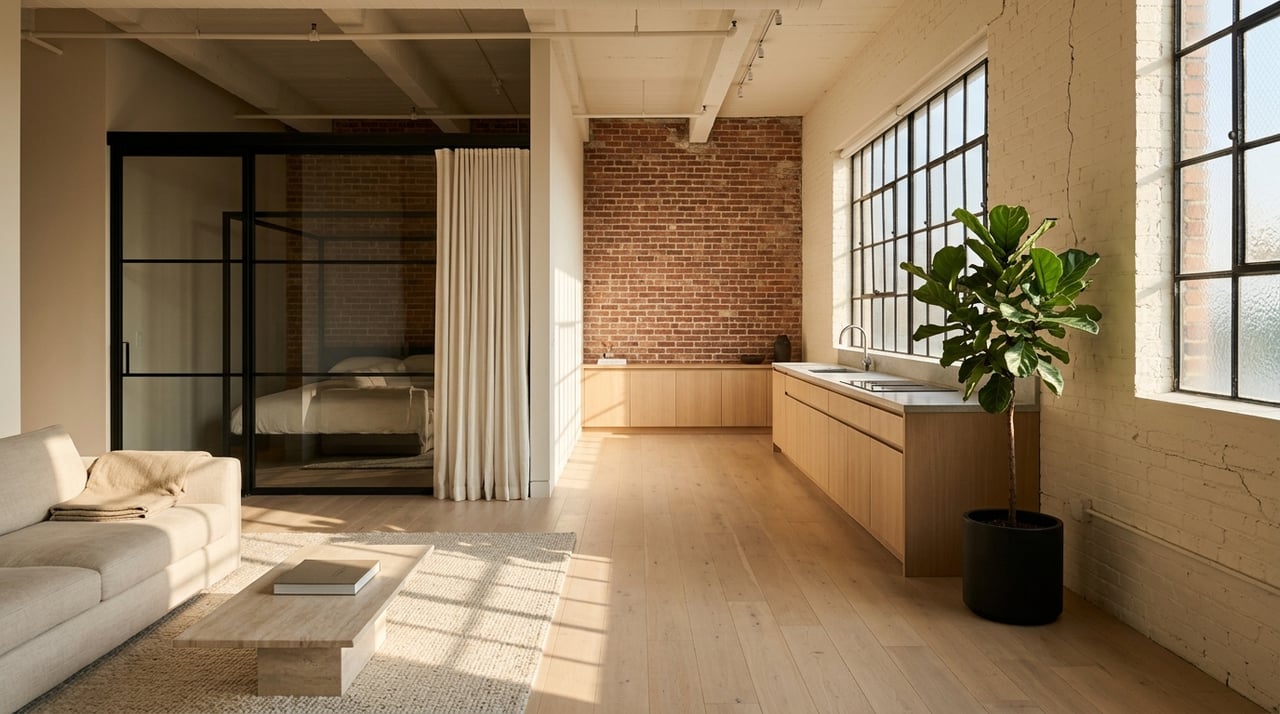
If you picture Tribeca loft living as effortless movie-set glamour, you are only getting half the story. The real experience is more interesting: you get scale, light, history, and flexibility, but you also need to think carefully about privacy, storage, and how you want the space to function day to day. If you are considering a loft in Tribeca, this guide will help you understand what the lifestyle actually feels like and what to look for before you buy. Let’s dive in.
Why Tribeca lofts feel different
Tribeca’s loft character starts with the neighborhood’s history. The area grew from a commercial warehouse district tied to Washington Market, and many of the buildings were originally built for storing, displaying, and moving goods rather than for conventional apartment living.
That history still shapes the homes you see today. Preservation records describe Tribeca as a place of warehouse and loft buildings, including early cast-iron structures, and the city ultimately designated four Tribeca historic districts: North, South, East, and West. In practical terms, that preserved a lot of the neighborhood’s physical character.
The classic building type in much of Tribeca was a five-story store-and-loft building from the 1850s. These buildings were often about 25 feet wide, built in stone, brick, or cast iron, with cast-iron and glass storefronts below and large open interiors above.
That is the reason so many Tribeca lofts feel long, open, and adaptable instead of divided into a series of smaller rooms. You are often living inside a volume that was never meant to be boxed up into a standard apartment layout.
What loft living feels like inside
A traditional loft usually means an older industrial or commercial space that has been converted to housing. Buyers often expect high ceilings, large windows, open floor plans, and industrial details like exposed brick, beams, or ductwork, and Tribeca is one of Manhattan’s clearest examples of that style.
In daily life, that often feels airy and dramatic. The sightlines are long, natural light can travel farther through the apartment, and the main living area may feel like one continuous room rather than a sequence of separate spaces.
For many buyers, that openness is the biggest draw. A single large area can support living, dining, working, and entertaining without ever feeling tight or overplanned.
At the same time, a loft does not always give you privacy by default. With fewer interior walls, sound can travel more easily, bedrooms may feel less insulated, and work-from-home setups often need more thought than they would in a room-by-room apartment.
The biggest appeal of Tribeca lofts
Tribeca lofts tend to appeal to buyers who value character as much as square footage. The combination of historic building stock, lower-rise streets, and warehouse-era architecture gives many homes a sense of authenticity that can be hard to replicate in newer construction.
There is also a strong sense of flexibility. In many lofts, you are not forced into one rigid layout, which can make the apartment feel more personal once it is set up around your routines.
If you like to entertain, host family, or move between work and home life in the same space, a loft can be especially attractive. The layout often makes it easier to gather people in one central area while still keeping the apartment visually calm and spacious.
Tribeca also remains mixed-use in parts of the neighborhood, which helps explain why some blocks still feel connected to the area’s working history instead of reading as purely residential. That edge is part of what many buyers respond to.
The trade-offs buyers should expect
The most honest way to describe loft living is this: it is spacious and highly adaptable, but not always turnkey in the way a conventional apartment can be. The openness that feels exciting on a first showing can require planning once you start thinking about everyday life.
Privacy is usually the first issue buyers notice. If the layout is very open, you may need to create separation for sleeping, working, or hosting guests without closing off too much light.
Sound is another common consideration. In a large open room with few walls, everyday noise can carry farther, which matters if more than one person is using the space at the same time.
Storage can also be less intuitive than in a standard apartment. When walls and small rooms disappear, many closets and shallow storage spots disappear too.
Older loft shells may bring additional practical questions. Some buyers find that older windows or less efficient insulation can make the space feel draftier than newer residential construction.
Hard lofts versus soft lofts in Tribeca
One of the most useful questions to ask is whether you are looking at a true hard loft or a newer soft-loft-style home. That difference can shape how the apartment feels and how much compromise you may need to make.
A hard loft is a real conversion of an industrial or commercial building. In Tribeca, that often means original warehouse-era proportions, larger open floor plates, and details tied to the building’s earlier life.
A soft loft is newer construction that borrows the look of loft living. You may still find open layouts and high ceilings, but the unit can be more intentionally planned for modern privacy, storage, and bedroom separation.
Neither is automatically better. If you want maximum character and openness, a hard loft may be the right fit. If you want the loft look with more built-in convenience, a soft loft may feel easier to live in.
How people make Tribeca lofts work
The good news is that loft living does not require you to accept one giant undefined room. In practice, residents often use furniture, textiles, and millwork to create zones while keeping the openness that makes the apartment appealing.
A common strategy is to let furniture do the planning. Sofas, dining tables, and low bookcases can define one area from another without cutting off light or making the home feel smaller.
Rugs also do more than decorate. They can help signal where one zone ends and another begins, and they may absorb some sound in a space with long sightlines and hard surfaces.
When buyers need more separation, folding screens, open bookcases, drapery, and sliding panels are often part of the solution. These elements can create visual and physical boundaries while still preserving a sense of openness.
In some lofts, custom cabinetry becomes the real workhorse. Built-ins and flush millwork can help an office or guest area serve more than one purpose, especially when the layout needs to stay flexible.
Storage matters more than many buyers expect
Storage is one of the least glamorous but most important parts of loft living. In a more conventional apartment, closets and smaller rooms absorb daily clutter almost automatically. In a loft, that hidden storage is often limited.
That is why integrated storage tends to matter so much. Built-ins, storage walls, low cabinets, and furniture that doubles as storage can make the difference between a loft that feels serene and one that feels visually busy.
This is also where buyers should think beyond the listing photos. A loft may look beautifully open when lightly staged, but you still need a realistic plan for coats, luggage, office supplies, household items, and seasonal storage.
If you prefer a home where everything has a designated concealed place, pay close attention to whether the existing layout already solves that problem or whether you would want custom millwork after closing.
Who tends to love Tribeca loft living
Loft living usually works best for buyers who enjoy open sightlines and are comfortable shaping the space around their habits. If you like the idea of one generous main room that can shift between quiet mornings, workdays, dinners, and weekends with friends, a loft may feel energizing.
Buyers who care about architectural character also tend to respond strongly to Tribeca. The historic districts, cast-iron and brick facades, and preserved low- to mid-rise streetscape create a setting that feels distinct from a more generic apartment experience.
On the other hand, if you know you need immediate separation between rooms, strong acoustic privacy, or abundant built-in storage, you may want to focus on lofts that have already been more fully configured or on newer loft-style buildings.
The key is not whether lofts are good or bad. It is whether the specific space matches how you actually live.
What to look for on a showing
When you tour a Tribeca loft, it helps to look past the drama of the scale and focus on function. The apartment may be beautiful at first glance, but the real question is how easily it supports your routine.
Here are a few smart points to evaluate:
- How much natural light reaches the deepest parts of the apartment
- Whether there is a practical way to create an enclosed office or guest area
- How the current owner handles storage
- Whether the bedroom areas feel private enough for your needs
- How sound may travel across the main living space
- Whether the home feels like a true hard loft or a more recently configured loft-style residence
These details can tell you as much as the square footage. In Tribeca, the best loft for you is often the one whose openness feels usable, not just impressive.
Why local guidance helps in Tribeca
Tribeca lofts can be highly individual, which is part of their appeal. It also means comparing one property to another is not always simple, especially when layouts, finishes, and levels of customization vary widely from building to building.
That is where neighborhood-level experience matters. Understanding the difference between authentic loft volume, thoughtful reconfiguration, and cosmetic loft styling can help you judge value more clearly and avoid surprises after closing.
If you are buying in Tribeca, it helps to work with a team that can translate the romance of loft living into practical decision-making. The right guidance can help you weigh character, function, and long-term fit with more confidence.
If you are exploring Tribeca lofts and want clear, experienced guidance on how a space will really live day to day, the DTNYC Team is here to help.
FAQs
What makes a Tribeca loft different from a regular apartment?
- Tribeca lofts often come from former warehouse or commercial buildings, so they typically feature open layouts, high ceilings, large windows, and fewer interior walls than a conventional apartment.
What does day-to-day life in a Tribeca loft feel like?
- Many buyers find it feels spacious, bright, and flexible, but also more dependent on furniture layout, storage planning, and privacy solutions than a standard room-by-room home.
What is a hard loft in Tribeca?
- A hard loft is a true conversion of an industrial or commercial building, often with original proportions and architectural details tied to the building’s earlier use.
What is a soft loft in Tribeca?
- A soft loft is newer construction that borrows loft-style features like open layouts and higher ceilings, often with more built-in privacy and storage than a traditional conversion.
How do buyers create privacy in a Tribeca loft?
- Common solutions include using bookcases, drapery, sliding panels, folding screens, and custom millwork to create zones without blocking too much light.
How much storage should you expect in a Tribeca loft?
- Storage can be more limited than in a conventional apartment, so many loft owners rely on built-ins, low cabinets, storage walls, and multi-use furniture.
Is Tribeca loft living good for working from home?
- It can be, especially if you like flexible open space, but many buyers will want to think carefully about sound, privacy, and whether an office area can be created without sacrificing too much light.
What should buyers check when touring a Tribeca loft?
- Focus on light, sound, storage, privacy, and whether the layout realistically supports sleeping, working, entertaining, and daily living in the way you need.
